
Erling Haaland's Bryne Career: Professional Debut, 16 Games Without a Goal, and His Youth Development
Erling Haaland is now one of the most influential forwards in world football, but his professional career did not begin at a European powerhouse. Before becoming a prolific goalscorer for Red Bull Salzburg, Borussia Dortmund, and Manchester City, Haaland was first a young footballer from the Norwegian town of Bryne.
Bryne was not only where he spent his childhood, but also where he received his first systematic football training, played organized matches, and eventually began his journey into senior professional football. From the youth academy to the reserve team and then the first-team debut, Haaland experienced the earliest and most fundamental stage of his development at Bryne FK. At this point, he was nowhere near as physically imposing as he would become later, nor was he yet the "goal machine" that fans know today. However, his movement, spatial awareness, desire to score, and fierce competitive mentality were already beginning to emerge.
In 2016, before turning 16, Haaland made his first-team debut for Bryne FK. A year later, he left his hometown to join Molde FK, taking the first major step toward accelerating his professional career.
Youth Years: From Local Football to Systematic Training
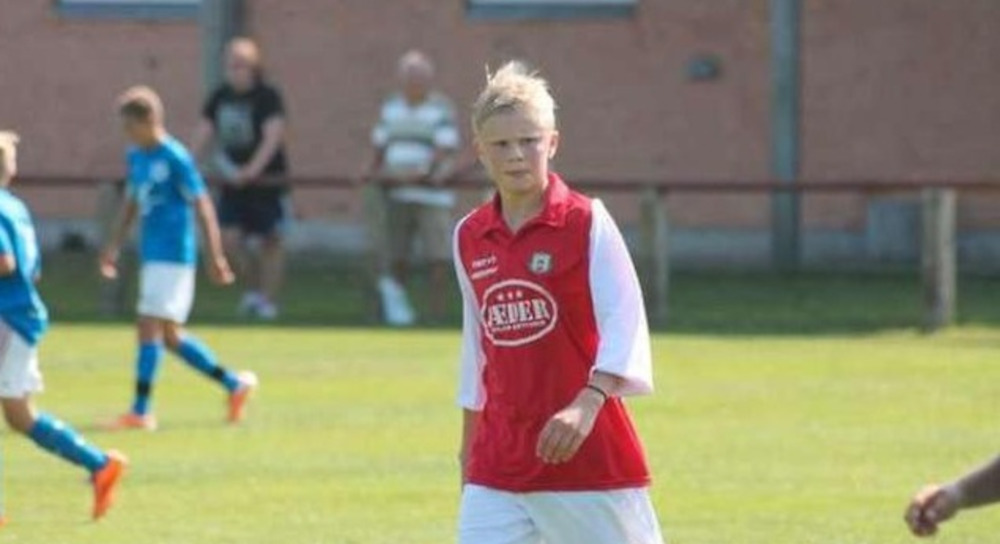
Haaland grew up in Bryne, Norway, and joined the local Bryne FK youth academy at around the age of five. For a young player growing up in a small town, a local club offered much more than a few training sessions each week. It provided an environment where he could play football regularly, compete in matches, and continually improve.
From an early age, Haaland showed an extremely strong interest in football. In addition to formal club training, he frequently played football with friends and participated in numerous informal matches on indoor pitches. These free-play experiences complemented his formal youth development perfectly. During structured training, he learned fundamental techniques, tactics, and match discipline; during informal games, he had to observe the situation himself, identify space, and independently decide when to pass, make a run, or shoot.
Training With Older Players: A Crucial Part of His Development
One notable feature of Haaland's early development was that he did not always compete against players his own age. One of his youth coaches, Alf-Inge Berntsen, recalled that Haaland was born in 2000 but, during his youth development, was moved into a training group consisting primarily of players born in 1999.
For a young Haaland, this meant dealing with differences in age and physical development. Compared with the Haaland who would later stand over 1.9 meters tall and possess tremendous explosive power and physical strength, his younger self was not particularly strong. As a result, he could not simply rely on physical advantages to solve problems. Instead, he had to learn early how to use technique, movement, decision-making, and spatial awareness to compensate for his physical limitations. This environment helped him develop several abilities that would later become defining characteristics of his professional career.
Reserve-Team Breakthrough: 18 Goals in 14 Games
As Haaland grew older, he gradually began entering match environments that were closer to senior football. In addition to youth competitions, he began representing Bryne's reserve team, Bryne 2. This step was crucial for a young player because reserve-team football was already significantly different from pure youth football: the physical intensity was higher, and the players possessed greater experience.
For a player as young as Haaland, this provided a valuable opportunity to adapt to senior football ahead of schedule. At the same time, his goalscoring performances at reserve-team level began attracting greater attention. In the 2015 reserve-team league, 14-year-old Haaland scored 18 goals in 14 appearances. Such an extraordinary scoring rate was already enough to attract attention within Norwegian football.
However, whether this goalscoring ability could translate into senior first-team football still needed to be proven. That became the first major challenge he faced after moving into Bryne's senior team.
Professional Debut: Stepping Into Senior Football at 16
In 2016, Haaland finally reached a major milestone in his professional football career. In May 2016, he made his first-team debut for Bryne FK, with more than two months still remaining before his 16th birthday.
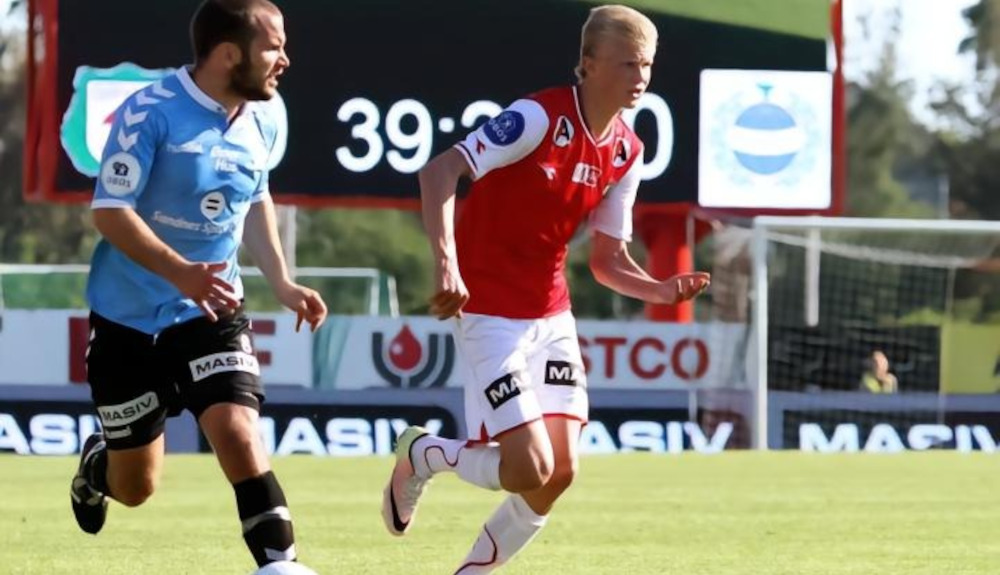
At the time, Bryne were competing in Norway's second tier, the OBOS-ligaen. This meant Haaland was beginning to face genuine senior professional footballers. These players were not only older but also possessed more developed physical attributes, greater match experience, and a more sophisticated understanding of the game. For a young player just leaving the youth football environment, it was an enormous challenge.
Importantly, his opportunity to make his first-team debut was directly connected to his youth coach, Berntsen. In May 2016, Berntsen was promoted to become Bryne's interim first-team manager. Having already understood Haaland's abilities, he gave the teenager an opportunity to step into the senior squad.
The Gap Between Youth Football and Senior Professional Football
There is a significant gap between youth football and senior professional football. In youth matches, young players can sometimes gain major advantages through speed, technique, or physical ability. Once they enter senior football, however, the pace, physical intensity, and tactical demands all increase significantly. Haaland had to go through this adaptation process as well.
At the time, he did not yet possess the impressive physical attributes that would later become his trademark. He therefore had to rely more heavily on movement, decision-making, and technique to create opportunities. This period gave him his first real taste of the competitive intensity of professional football.
16 Games Without a Goal: A Difficult First-Team Adjustment
Haaland had already demonstrated tremendous goalscoring ability at youth and reserve-team level, but that success did not immediately carry over after he joined Bryne's first team. He made 16 first-team appearances for Bryne without scoring a goal.
Compared with his extraordinary 18 goals in 14 reserve-team appearances, this was a dramatic contrast. For a player who would later become one of the world's elite goalscorers, it is a particularly striking statistic. Yet this period demonstrates that Haaland's career was not an uninterrupted progression of goals and records from the very beginning. He also experienced adaptation and setbacks.
Against senior players, Haaland had to deal with stronger physical challenges, a faster pace of play, and more sophisticated defensive systems. At the same time, his physical development was still incomplete. The height, strength, and speed that would later become major advantages had not yet fully emerged.
Therefore, the importance of his time with Bryne's first team was not primarily measured by how many goals he scored. Its greater significance was that he was experiencing senior professional football for the first time. The experience taught him that success at youth level does not automatically translate into success against senior professionals and that he would need to continue developing.
What Did Bryne Teach Haaland?
Looking back at Haaland's entire career, Bryne FK did not directly produce a finished world-class striker. Instead, it provided the essential foundation upon which his later development was built.
1. Match Intelligence Beyond Physical Advantages
As a youth player, Haaland did not yet possess obvious physical advantages, so he had to rely on other qualities to influence matches. Movement, technique, spatial awareness, and decision-making were particularly important during this period. Later, as his physical abilities developed rapidly, these early-developed qualities became an integral part of his overall game.
2. A Deep Understanding of Space
One of Haaland's most dangerous qualities today is his ability to quickly identify space behind defensive lines. This is not simply a matter of speed. What truly matters is when he begins his run, from which position he starts it, and how he reads the positioning of defenders. This understanding of space began developing during his youth years.
3. An Obsession With Scoring and a Competitive Mentality
Haaland has always placed enormous importance on scoring goals. When he missed chances that he believed he should have converted, he often displayed clear frustration. While that frustration could reflect disappointment, it also demonstrated his exceptionally high standards for his own goalscoring efficiency. For a young striker, this competitive mentality would later become one of the driving forces of his professional career.
4. Learning and Adapting From Failure
Haaland's experience with Bryne's first team also taught him an important lesson: success in youth football does not mean immediate success in senior football. He needed to learn how to adapt to a new pace of play, stronger physical challenges, and different tactical demands. This ability to adapt would repeatedly appear throughout his career. Whether moving from Bryne to Molde, from Molde to Red Bull Salzburg, or from Borussia Dortmund to Manchester City, he consistently demonstrated the ability to adjust quickly to new environments and continue scoring goals.
Leaving Bryne: The Road to Molde and European Football
Haaland's time at Bryne eventually reached an important turning point. He had completed the transition from youth football to senior football at his hometown club and had demonstrated the potential to progress to a higher level of professional football. His next step required an environment where he could continue developing.
In February 2017, 16-year-old Haaland transferred to Molde FK. The move marked his official departure from his hometown and his entry into Norway's top-level professional football environment.
At Molde, Haaland met manager Ole Gunnar Solskjær, who would have an important influence on his development. Solskjær himself had been an elite striker and spent much of his career at Manchester United, where he became famous as a "super-sub." His background as a forward allowed him to help young Haaland continue improving from the perspective of an attacking player.
At Molde, Haaland began further refining the goalscoring ability he had already demonstrated at Bryne. At the same time, his physical attributes began developing rapidly. As his height, strength, and speed continued to improve, he gradually developed a much more pronounced physical advantage. Once those attributes were combined with the movement, spatial awareness, and finishing ability he had developed earlier, Haaland began to emerge as a truly dangerous professional striker.
Key Statistics and Timeline of Haaland's Bryne Career
| Period | Stage | Key Performance and Milestone |
|---|---|---|
| Around 2005 | Joined Bryne FK youth academy | Joined his hometown club at around age five and began systematic football training |
| Youth years | Bryne youth academy | Entered a training group for players born in 1999, competing and training with older players |
| 2015 | Bryne 2 (reserve team) | Scored 18 goals in 14 appearances, demonstrating an extraordinary scoring rate far beyond his age group |
| May 2016 | Bryne FK first team | Made his senior first-team debut before turning 16 |
| 2016 season | Bryne FK first team | Made 16 first-team appearances without scoring, experiencing the difficult transition from youth to senior football |
| February 2017 | Transfer to Molde FK | At age 16, left Bryne and joined Norwegian top-flight club Molde, beginning a new chapter in his professional career |
FAQ: Frequently Asked Questions About Haaland's Bryne Career
Q: When did Haaland join Bryne FK?
A: Haaland joined his hometown club, Bryne FK, at around the age of five and gradually developed through the club's youth academy system before becoming a professional footballer.
Q: When did Haaland make his Bryne first-team debut?
A: Haaland made his Bryne FK first-team debut in May 2016, when he was still under 16 years old. At the time, Bryne were competing in Norway's second tier, the OBOS-ligaen.
Q: How many appearances and goals did Haaland have for Bryne's first team?
A: Haaland made 16 appearances for Bryne FK's first team but did not score a goal. However, before that, he had scored 18 goals in 14 appearances for the reserve team.
Q: Why didn't Haaland score for Bryne's first team?
A: Haaland had only just entered senior football, and his physical development was not yet complete. He needed to adapt to stronger physical challenges, a faster pace of play, and more sophisticated defensive systems. His goalscoring ability at youth and reserve-team level did not automatically translate into senior professional football. The experience taught him how to adapt to different levels of competition.
Q: How did Haaland perform for Bryne's reserve team?
A: During the 2015 season, 14-year-old Haaland scored 18 goals in 14 appearances for Bryne 2 in lower-level competition, demonstrating an extraordinary scoring rate far beyond his age and attracting widespread attention within Norwegian football.
Q: When did Haaland leave Bryne to join Molde?
A: Haaland left Bryne FK in February 2017 to join Molde FK at the age of 16. At Molde, he met manager Ole Gunnar Solskjær, who would have an important influence on his career.
Q: Was Haaland already a very physically strong player as a child?
A: No. During his early youth years at Bryne, Haaland was relatively slender and did not have a significant physical advantage over older players. His physical abilities developed progressively during his later youth years and early professional career. This forced him to learn early how to use technique, movement, and spatial awareness to compensate for his physical limitations.
Conclusion: The Beginning of His Professional Football Story
Bryne FK was where Haaland's professional football story truly began. Here, he developed from a Norwegian youngster who simply loved football into a young player who received systematic training, competed in senior matches, and began attracting attention.
His development was not a perfect straight line. During his reserve-team period, he produced the extraordinary statistic of 18 goals in 14 appearances. But after entering Bryne's first team, he went through a spell of 16 games without scoring. This dramatic contrast between overwhelming success and a goalless run perfectly illustrates the significant gap between youth football and senior professional football.
Yet this experience was also an indispensable part of Haaland's career. At Bryne, he faced the challenges of senior football for the first time and had to prove that he could translate his youth-level talent into professional performance. More importantly, many of the qualities that would later define Haaland's playing style—his movement, spatial awareness, desire to score, and competitive mentality—were continuously refined on the training pitches and in matches at Bryne.
In February 2017, 16-year-old Haaland left Bryne and joined Molde. His next destination would no longer be his hometown club, but the stage of Norway's top-level professional football. But whether he later went on to Salzburg, Dortmund, or Manchester, Bryne FK would always remain the first chapter of his professional football story.
📚 Further Reading: Explore Haaland's Early Career
If you want to learn more about the development of this superstar, explore these related guides: